


Physics graduate and supervisor reflect on challenges and shared success of PhD dissertation work

Graduated physicist Aaro Väkeväinen from the Quantum Dynamics (QD) group received a 2020 School of Science Dissertation Award for his doctoral thesis “� in the field of nanophotonics. In this article both he and his supervisor reflect on the process and what ultimately led them to success.
In his thesis, Väkeväinen demonstrated strong coupling between light and organic dye molecules in plasmonic nanoparticle arrays, which ultimately led to observation of Bose-Einstein condensation (BEC) of strongly coupled lattice plasmons. These pioneering results were achieved only by overcoming many experimental challenges. Remarkably, the strongly coupled BEC is formed at record speed of only about 100 femtoseconds at room temperature, and hence required a special measurement technique which Väkeväinen developed. The results are of high scientific interest as the BEC offers a new platform for studies of non-equilibrium quantum phenomena, at room temperature. As the BEC emits a bright light beam with highly tunable properties, applications in future optical and quantum technologies are also possible.
Looking back at this thesis work, Väkeväinen recalls several challenges- some of these were of experimental nature, but others were difficulties experienced by many PhD students. Experimental challenges included identifying a suitable dye molecule that dissolves at high-enough concentration so that strong coupling could be achieved, while also having strong-enough fluorescence to generate the desired lasing or condensation effects. Another practical challenge was to master the alignment of the complicated optical setup. To be able to observe this type of BEC, several tweaks in the settings turned out crucial. Väkeväinen says he identified these critical settings almost accidentally while having to adjust the power of the pump laser.
Other challenges were of a logistic nature- Väkeväinen particularly mentions the sheer amount of data and subsequent handling and analysis. He consciously focused on a strategy whereby he fabricated systematically numerous samples with varied experimental parameters to figure out the required conditions, rather than trying to identify the right optimal parameters beforehand. Väkeväinen reckons that by doing so, he increased his chances to make quite a few interesting unexpected observations that ultimately allowed him to succeed.
Finally, Väkeväinen reflects on some common PhD challenges, namely coping with time pressure to obtain the required results. He adds that his last article in Nature Communications was submitted only one month before submission of his thesis. In practice this meant he was conducting final experiments, writing on his research paper and thesis all at the same time. He stresses that this was only possible with the right support provided by his supervisor and QD colleagues. “Fortunately, I got a lot of support from my professor and colleagues in analyzing the results, making conclusions and writing the article�.
This combined effort led eventually to Väkeväinen’s remarkable output: as part of the thesis, he published altogether five research articles, two of them as first author, in esteemed journals including Nature Communications, Nano Letters and Nature Physics.
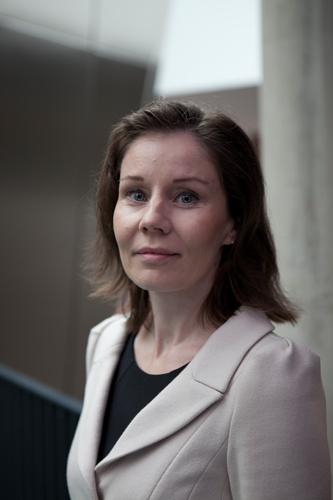
Prof. Päivi TörmäVäkeväinen is a truly versatile scientist
Academy Professor Päivi Törmä, Väkeväinen’s supervisor, comments on the high level of quality of his experimental and fabrication work, meticulous methodology and data analysis skills. Overall, she remarks “Väkeväinen is a truly versatile scientist�. The results reported in his latest paper published in Nature Communications are the fruit of two years of hard lab work- he essentially invented a new measurement technique that allowed the realization of the strongly coupled BEC where the dynamics occurs in the femtosecond scale. “This type of BEC is still the workhorse of the QD group experiments and was extremely challenging to achieve�, stresses Törmä. The remarkable quality and output of the thesis work was also noted by Väkeväinen’s thesis opponent, Lukas Novotny (ETH Zurich), who is himself an authority in the nanophotonics field.
During his PhD work, Väkeväinen also gained experience from industry, and as a result he was hired immediately after graduation by Microsoft HoloLens where he now works as a Hardware Engineer. He is applying the skills acquired during his PhD in advanced optics, physics of light-matter interaction, nanofabrication, data analysis, and managing challenging research projects.
The research article by Aaro Väkeväinen in Nature Communications can be found under
Contact
Aaro Väkeväinen
Read more news

Pressed by the devil , shaped by the future
Curly birch shines in Aalto University’s Wood Studio’s fresh perspectives at the Craft Museum of Finland’s summer exhibition.
Greater choice of language studies for students – four universities in the Helsinki Metropolitan Area open up language provision
Aalto University, The University of Helsinki, the University of the Arts Helsinki and Hanken School of Economics have launched a new network to promote language learning.
Researchers from Textile Chemistry Group presents textile innovations at AUTEX World Conference
Researchers from the Textile Chemistry Group presented their latest research at the AUTEX World Conference.