


Aalto Scientists Experiment with Helium Plasma to Help Pave Way for Fusion Energy

is expected to start operations using helium and hydrogen test plasmas before commencing experiments with deuterium and tritium, the more efficient fuel used by JET to break the world record for sustained fusion energy at the end of 2021. ITER鈥檚 goal is to prove the feasibility of fusion as a large-scale and carbon-free source of energy.
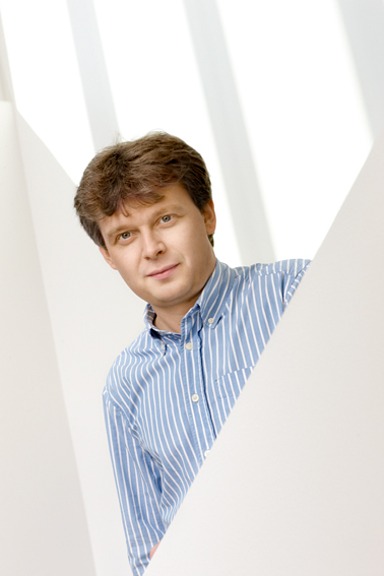
As part of , a research collaboration belonging to , scientists at Aalto University also participate in the JET studies. Mathias Groth, a researcher at Aalto, describes the work done in Otaniemi:
鈥漇cientists from the Fusion and Plasma Group at Aalto lead the investigations into the role of helium as the main fuel species in detaching plasma from the divertor target plates at the bottom of the experiment device. We employ comprehensive measurements and state-of-the-art computer simulations to isolate the role of hydrogenic molecules in the process of plasma detachment in hydrogenic plasmas by using helium plasmas. We also perform cutting-edge computer simulations to characterize heat-, particle-, and momentum transport in the cores of hydrogenic and helium plasma.鈥�
Outside of Aalto, other EUROfusion researchers will study the behaviour of the plasmas as well as test the impact of helium on JET鈥檚 tungsten and beryllium wall to help ITER efficiently build up to full power operations once its construction finishes and operations begin in 2025.
More information
Read more news

New funding expands聽FITech Network University's聽offering with courses related to data skills
FITech Network University, coordinated by Aalto University, has been granted new funding to address the skills聽needs聽related to data competence.
International educational project at Aalto University funded by the TFK Programme
The Bio-Design for Low Carbon Architecture (Bio-LCArch) project is a collaborative initiative between Aalto University in Finland and Beijing Jiaotong University in China, geared toward demonstrating how bio-based materials can facilitate the construction industry's transition to net-zero emissions.
Coming soon, ARTEFAKTI26 (3.-9.9.2026)
ARTEFAKTI returns for the fourth year to Helsinki Design Week from the 3rd to 9th of September 2026 at Puristamo hall in Kaapelitehdas