


Aalto University involved in four research projects selected for funding in Business Finland’s major call

Aalto University is involved in four research projects that have been awarded the Rise to Challenge (Näytönpaikka) funding by Business Finland. One of the projects, FINe-Health Foundry, is in the field of health technology and is led by Professor Samuel Kaski from Aalto University.
In total, six projects received the Rise to Challenge funding, with combined funding of about EUR 30 million. The call supports bold research initiatives that build expertise in future growth sectors and create long-term pathways for translating research into business.
Boosting the efficiency of healthcare with AI
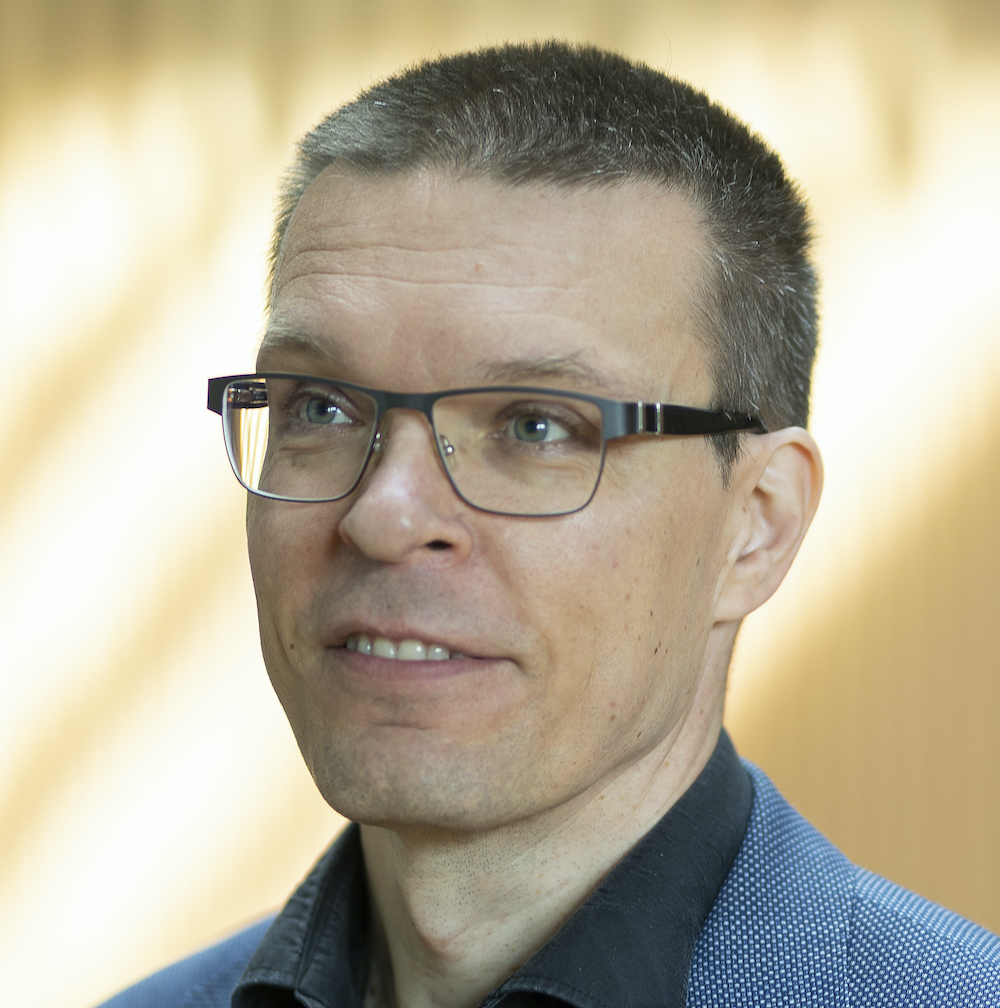
aims to unlock next-generation decision-making in healthcare and beyond with the help of AI. The project is led by Aalto University professor Samuel Kaski. Assistant professors Azade Farshad and Jiancheng Yang from Aalto, professors Andrea Ganna, Arto Klami and Luigi Acerbi from the University of Helsinkiand assistant professor Shaoxiong Ji from the University of Turku are also involved. These seven principal investigators are all members of , a national hub of machine learning and AI research excellence.
There is huge global demand for well-governed, real‑time solutions for healthcare, especially as populations are aging in many countries, which increases access strain on already limited health systems and resources. In Finland, 26% of the population is projected to be over 65 by 2030. Healthcare needs and costs are far higher in this cohort than in the under-65 age group. In parallel, fragmented health data and information systems slow and weaken decision-making at the patient, operational, and population levels. To address these challenges, and boost the efficiency of healthcare in Finland and beyond, the FINe-Health Foundry aims to build the world’s first nationwide healthcare foundation model for real-time clinical decision support, targeted prevention, and future planning via comprehensive ‘what-if’ analyses. Tested and delivered via secure virtual labs, it will accelerate medical research, reduce unnecessary care, and support evidence-based health policy and innovation, creating new commercial opportunities.
Scaling quantum technologies with new signal solutions
The project develops new signal technology to scale up quantum information processing at low temperatures. Coordinated by VTT, the project involves Tampere University and Aalto University – all of which are part of , Finland's national quantum institute. The aim is to improve the energy efficiency and scalability of quantum computers by combining optical control with ultra-precise signal technology based on superconducting quantum phenomena. Current technologies face major challenges at large scales, but the new approach enables highly accurate, low-noise signals and more energy-efficient solutions.
‘Combining optical telecommunications technology with superconducting circuits enables the generation of near-perfect programmable electrical signals, which is crucial for realizing accurate quantum operations. The approach can also help integrate quantum and supercomputing and opens the way toward error correction and alternative forms of computing,' says Professor Sorin Paraoanu.
New imaging technology for novel application domains
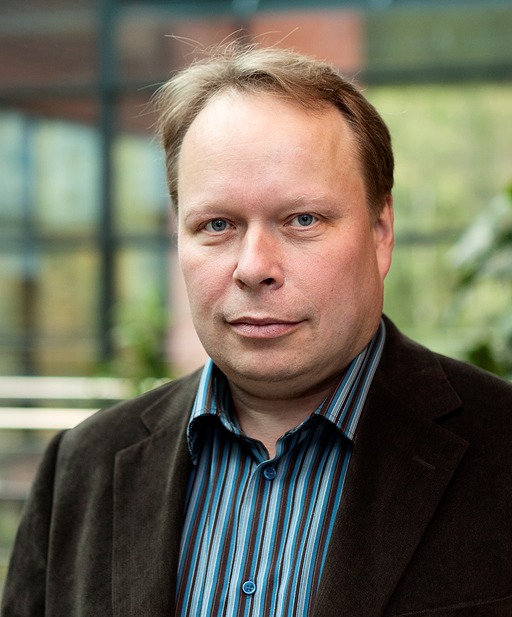
In the project, new, higher-precision imaging technology is being developed. The project is led by Professor Samuli Siltanen at the University of Helsinki, and Aalto University is one of six partners. From Aalto, the participants are Professors Nuutti Hyvönen and Hanna Renvall.
The aim is to improve reconstruction accuracy through multimodal measurements and to expand imaging applications. Inverse mathematics enables imaging from incomplete and noisy data, supporting the development of more affordable and portable devices. ‘Mathematical methods allow imaging beyond X-rays, for example with visible light, electrical currents, and magnetic fields, or their combinations. Nonlinear and hyperspectral methods improve the characterisation of an object’s structure,’ says Hyvönen.
Strengthening quantum-enabled life sciences
The project, carried out by a consortium of Natural Resources Institute of Finland, VTT, Aalto University and University of Helsinki, will explore quantum computing applied to bio and DNA data to advance genomics, biomaterials engineering, enzyme design and biological modelling. From Aalto, the participating professor is Ilkka Tittonen.
The consortium will develop computational proof-of-concepts for genome-assisted breeding and methods for utilising sustainable biobased materials and biomass, supporting new ventures and strengthening national position in quantum-enabled life sciences.
Funding aims to support broadly applicable new expertise
Rise to Challenge is Business Finland’s annual funding call for projects with identified productivity benefits and/or international commercial potential. The aim is to support breakthrough research initiatives and the creation of broadly applicable new capabilities, with a focus on long-term impact. Rise to Challenge accelerates cutting-edge research that builds the skills and capabilities needed by the growth sectors of the future.
Business Finland is Finland's official government agency for trade and investment promotion, innovation funding, travel promotion and talent attraction.
Read more
Read more news

The company established by three anthropologists relied on strong research expertise
Etnografinen tutkimustoimisto Kenno Oy was established in 2014 when its three founders were finalising their master's degree studies at the University of Helsinki and wanted to create an interesting job for themselves.
Bachelor's Students Successfully Complete Research Internship
Three bachelor's students have successfully completed their research internships.
From Materials to Smart Textiles: Benjamin Begins a New Chapter at Aalto
Ping-Chun Chen is a researcher from National Tsing Hua University, Taiwan.