


Catalysis in a new light: Microscale interactions could enhance clean energy technologies

Catalysts power many technologies that modern life depends on. They help remove pollutants from car exhaust, enable the large-scale production of fertilizers that feed billions of people, and play a key role in emerging energy technologies such as hydrogen production and fuel cells. Without catalysts, many chemical processes would be impossible.
Despite their importance, scientists still struggle to fully understand how catalysts work at the smallest scales. The key processes take place at scales millions of times smaller than a grain of sand. But observing what happens there during a chemical reaction has been extremely challenging.
A new study now offers a window into this hidden world. Researchers from Aalto University, University of Warwick and the Massachusetts Institute of Technology have reported new findings in the prestigious journal Nature Catalysis.
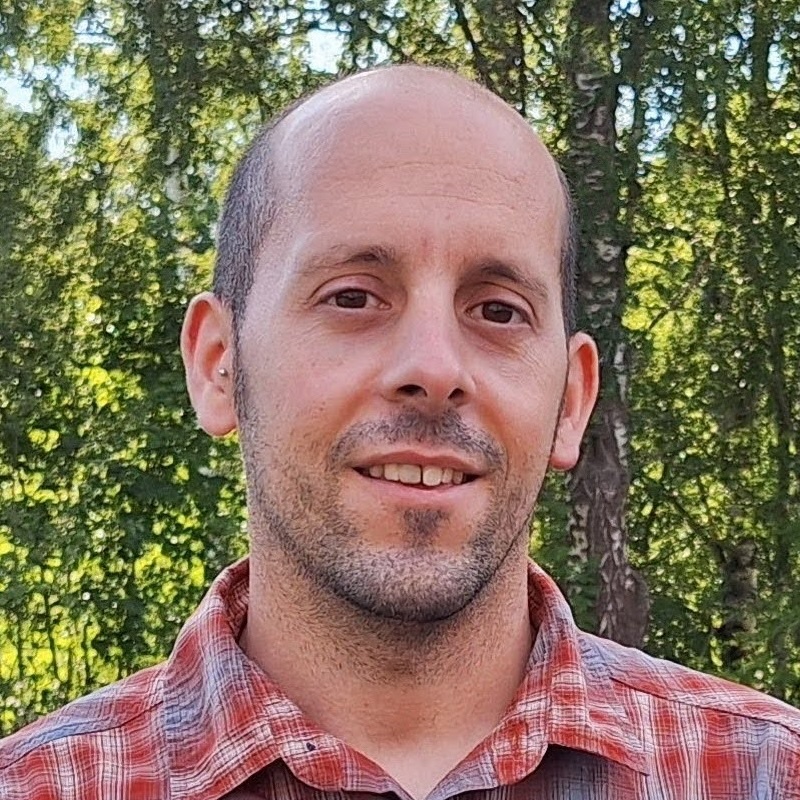
鈥淭he work shows how different microscopic regions of a catalytic material interact with each other during a reaction and how these interactions can strongly influence the overall performance of the material鈥�, says Assistant Professor Daniel Mart铆n-Yerga from Aalto University.

A closer look at the hidden landscape of catalysts
Mart铆n-Yerga compares the study of catalysts to looking at snow. From far away, a snowy landscape appears smooth and uniform. But when examined more closely, it becomes clear that snow is made of countless individual flakes, each with its own structure.
鈥淐atalytic materials behave in a similar way. While they may appear uniform at larger scales, their surfaces contain many microscopic regions with different properties鈥�, Mart铆n-Yerga says.
Using a highly sensitive technique known as electrochemical microscopy, the researchers examined tiny areas of a catalyst surface while a reaction was taking place. The measurements revealed that different regions of the material behave differently and need to cooperate to enable the reaction.
鈥淭hese findings challenge the traditional idea that catalytic reactions are governed by a single type of active site. Instead, they show that interactions between different regions of a material can play a crucial role in determining how efficiently a catalyst works鈥�, Mart铆n-Yerga says.
Understanding these microscopic processes could help researchers design better catalysts for clean energy and fuel production. By revealing how catalysts operate at the smallest scales, the study opens new possibilities for designing materials that are more efficient for sustainable chemical technologies.
Sustainable ways to produce chemicals, fuels and materials
The new findings are closely connected to the broader research direction of Mart铆n-Yerga鈥檚 group at Aalto University. Established in early 2025, the group explores how electricity can be used to drive chemical reactions in smarter and more sustainable ways.
Electrochemistry, the field at the heart of the group鈥檚 work, can be thought of as a way of 鈥渟teering鈥� chemistry using electricity. Instead of relying on high temperatures or large amounts of energy, electrical currents can guide molecules along specific reaction pathways. When the electricity comes from renewable sources such as wind or solar power, this approach could open new possibilities for producing fuels, chemicals and materials with a much lower environmental footprint.
鈥淓lectricity gives us a very precise way to control chemical reactions. It allows us to guide molecules step by step, almost like adjusting the knobs of a machine, to transform them into something more useful鈥�, Mart铆n-Yerga says.

The group studies how reactions unfold at the interface between materials and liquids, tiny environments where atoms, electrons, and molecules interact. Understanding these microscopic processes is key to designing better catalysts and electrochemical technologies.
The catalysts developed in the group are then used to convert biomass-derived molecules into valuable chemicals and fuels, explore alternative routes to produce green hydrogen, and transform waste streams such as plastics into new products.
A central goal of the work is connecting different scales of chemistry, from the nanoscale behaviour of materials all the way to the performance of real devices. Techniques such as electrochemical microscopy, used in the recent study, play an important role in this effort.
鈥淭hese tools allow us to zoom in and watch how reactions happen on extremely small areas of a surface. But they also help us move faster. Instead of testing one material at a time, we can quickly compare many candidates and identify the most promising ones鈥�, Mart铆n-Yerga says.
The group is also beginning to explore more automated ways of running experiments, where instruments can carry out measurements independently and help accelerate discoveries.
Although the research group is still young, its work is already supported by competitive funding from the Research Council of Finland, NordForsk, the Technology Industries of Finland Centennial Foundation and the Foundation for Research of Natural Resources in Finland.
Read the publication:
The findings were published in the prestigious journal Nature Catalysis. Read the full article: .
Further information:
Read more news

The Metex Prize 2026 winner is Hana Rehorc虒i虂kova虂
The Metex Prize is awarded for excellence in Master鈥檚 thesis work done in collaboration with a technology company or to promote the significance and use of design and art in Finnish industry.
Ornamo Awards '26: The Design Forerunner Award to service designer Mariana Salgado
The鈥疍esign Forerunner Award鈥痝oes to service designer Mariana Salgado, who brings design into climate research and builds people鈥檚 participation in the sustainability transition.
Doctoral thesis: Kata Fodor examines sustainable diets 鈥� between the plate and the planet
In her doctoral thesis, Kata Fodor examines how more sustainable diets can be promoted through the design of environments, spaces, infrastructures, and cities.