


I am passionate about collaboration between industry and academia

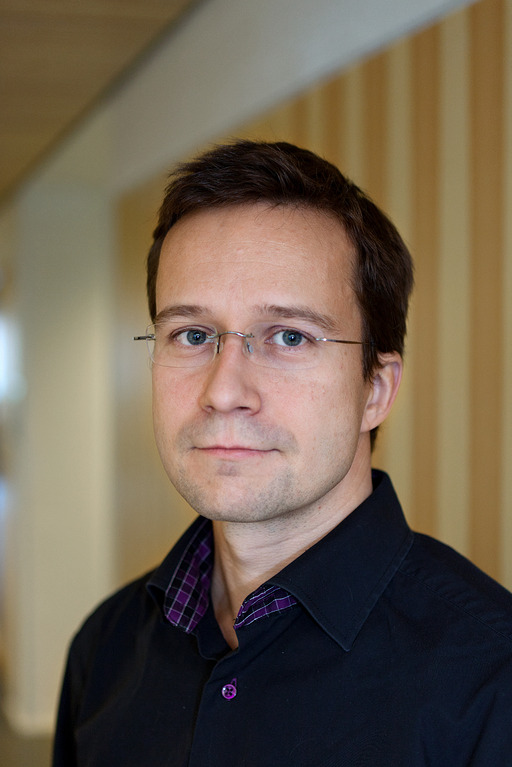
Behnaz Assadzadeh, PhD in Physical Chemistry from University of Tabriz, Iran, works as a postdoctoral researcher at the Aalto University’s School of Chemical Engineering. The research group lead by Professor Ville Alopaeus focuses on developing new raw materials and technology solutions from natural raw materials. Green chemistry is important to Behnaz, and she is interested in developing green technologies for extraction and other separation processes.
Behnaz works in a Business Finland so called funded research project as a member of Aalto University’s research group. The research project binds business and academic partners together having two other academic partners which are University of Helsinki and University of Eastern Finland. The industrial partners are CH-Bioforce Oy, Neste Oyj, Kiilto Oy, Measure Oy and Valio Oy. The ultimate target of the project is to create new businesses through research, development, and innovation.
The basic idea of a biorefinery is to make maximum economical use of biomass. This includes the possible production of high value-added products from each biomass component. If cellulose is used primarily to produce fibers, for example, other uses should be found for hemicellulose and lignin, which become by-products. The production of chemicals, especially fine and basic chemicals, from by-products is, in principle, an excellent way to produce high value-added products from biomass.
‘The challenge for biomass utilization is its structural heterogeneity. Biomass is thus very different in chemical reactivity from crude oil, which consists mainly of hydrocarbons. Where decades of research and development have made crude oil refining very efficient, similar methods for biorefineries are still being developed’, explains Behnaz Assadzadeh. ‘My research topic is to create an appropriate extraction technology for the design of efficient separation processes.’
The good news is that lignocellulose-based biomass is readily available even in large quantities from the forest industry and agricultural by-products.
‘The aim of this project is to develop a process for converting biomass saccharides into value-added raw materials for the chemical industry. Saccharides may originate from hemicelluloses and other natural polymers, or from other sources such as side streams of lactose-free dairy products manufacturing. Chemical Engineering research group at Aalto is doing both basic and applied research to find ways to fractionate and purify the reaction products in a sustainable way, and to develop sustainable processes around the concept. The process being developed in the project is thus likely to create significant added value for the Finnish forest and chemical industry’, says Professor Ville Alopaeus.

Ville AlopaeusThe process being developed in the project is likely to create significant added value for the Finnish forest and chemical industry
The transition from traditional petroleum-based feedstocks toward biomass-derived carboxylic acids is an obvious global trend. Selection and optimization of the appropriate extraction technology plays a major role in obtaining extracts with high purity. Furthermore, recycling solvents and reusing them are among the main challenges to attaining a cost-efficient as well as ecological industrial application. Chemical processing has been made greener by reducing wastage through recycling.
‘I have gained a lot of experience and valuable knowledge in this project. The working group works closely together, and we have frequent discussions where you get ideas and give feedback to your colleagues. I always think that this project is like a chain where different teams work in their own parts of the chain. I find it extremely rewarding to be able to work towards a greater goal together with a bigger group. We all want to create new greener processes and products to increase the wellbeing on our planet’, says Behnaz Assadzadeh.
Before joining the Aalto’s team in the Business Finland Veturi project, Behnaz worked as a post-doctoral researcher in the Czech Academy of Sciences and prior to that in Zhejiang University in China. ‘The international atmosphere here in Aalto University makes it easy to blend in and the positive energy really sticks to you. I arrived in Helsinki in September (2021) and fell in love with the city right away. No wonder, the happiest people live here’, she concludes.
Read more news

Funding for impact assessment research concerning the Helsinki Capital region available
Funding call of the Urban Impact project (Kaupunkivaikutus) is open until 11. October 2026.
‘Gamified’ DDoS attacks wage psychological warfare against NATO states, finds study
‘Hacktivism’ is evolving into a hybrid threat that blurs the lines between propaganda, geopolitical warfare and financially incentivised cyber-crime, says study of pro-Russian hackers NoName057(16).
We need growth – but what exactly are we growing?
Governments demand it, companies promise it, and universities are expected to deliver it. Growth is widely seen as the answer to debt, competitiveness, and the future of the welfare state itself. But what do we actually mean by growth – and what kind of growth are we aiming for?