


Miloš Mladenović appointed Vice Dean for Research at the School of Engineering

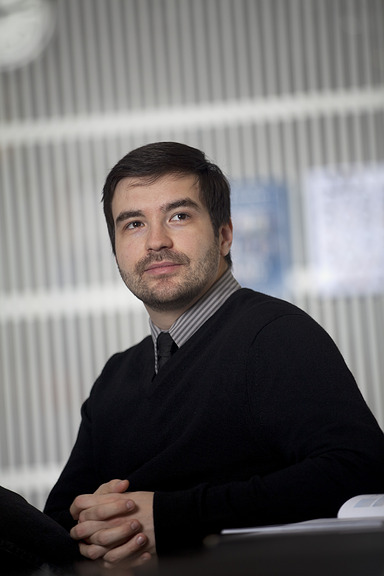
The President of Aalto University Ilkka Niemelä has appointed Associate Professor Miloš Mladenović as the Vice Dean for Research at the School of Engineering. The term is five years, from 1 August 2024 to 31 July 2029. The post was previously held by Professor Seppo Junnila.
Mladenović is an Associate Professor in the Spatial Planning and Transportation Engineering group at the Department of Built Environment. He is a well-recognized researcher and teacher with extensive and active international networks. He has worked at Aalto since 2014, and is currently leading the EIT MSc program in Sustainable Urban Mobility Transitions.
Mladenović’s research focuses on the interaction between society and emerging mobility technologies, and the development of decision-support methods and planning processes.
As Vice Dean, Mladenović will be responsible for supporting the Dean in all research related issues and driving their development.
“The focus of my work will be on doctoral education and external funding – with an emphasis on further developing our research culture and processes. Besides that, I’m excited for the opportunity to learn new and develop further, while serving the community�, Mladenović says.
"I want to warmly welcome Milos to the school's management team and I'm looking forward to our collaboration", says Dean Kari Tammi.
Read more news

Aalto-Primo has been updated
Aalto-Primo has been upgraded to a new version.
Erdal Aydin has been appointed as a fixed term Associate Professor at the Department of Chemical and Metallurgical Engineering
PhD Erdal Aydin has been appointed as a five year fixed-term Associate Professor at the Department of Chemical and Metallurgical Engineering as of 1 September 2026. The field of the professorship is Control and Automation of Chemical Processes.
Electricity supply in Finland could face a major test in the 2030s as EV charging drives demand
As EVs become more common, the scheduling of their charging could help secure electricity adequacy, especially in winter.