


Raine Viitala: 'Spotify for electric motors' opens up platforms for device designers

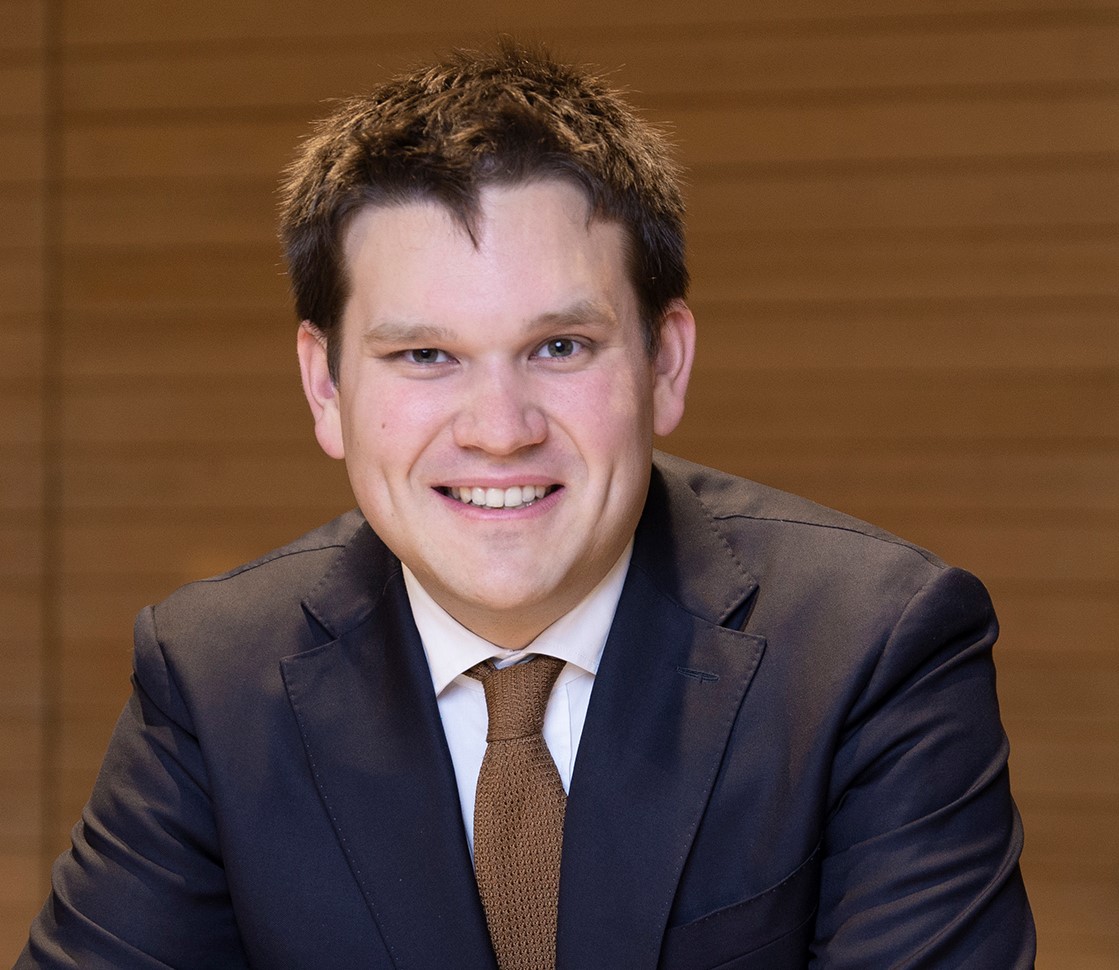
Raine Viitala represents the more traditional engineering expertise in ABB's Green Electrification 2035 programme. Viitala, Assistant Professor in the Department of Mechanical Engineering, emphasises ABB's willingness to share their platforms and models, but reminds that the fear of competitor access still hinders complete openness. That is why researchers in his team are trying to develop completely new methods for sharing of models, so that there would be no need to worry about IPR leakage to others.
"The main idea behind our project is to generate a kind of 'Spotify for electric motors', a format that is just as easy, and where you can download these open models from ABB's website", Viitala explains.
The research team led by Viitala is involved in the CO-DES (Digital transformation of collaborative powertrain design) project. Their noble aim, in Viitala's words, 'is to make electricity and machines better work together and talk to each other'. The group is developing the design of powertrains containing electric motors to achieve greater collaboration between the different players.
"At the moment, the design is conducted in silos, so each supplier does their own sub-optimisation. And in the end you are left with a horribly oversized and expensive product that still doesn't work optimally", says Viitala.
If successful, the project will give a real boost to the green transition through energy and material efficiency, among other things. And having a green project does not necessarily mean financial losses 鈥� quite the opposite.
"Moving from partial to total optimisation helps save on energy costs as the system works more optimally. Furthermore, the manufacturing costs are reduced because much less black iron and copper are needed for systems that are sensibly sized but still meet the minimum conditions 鈥� and work optimally. This also leads to a commercial advantage in that the equipment is also likely to be cheaper. The aim is, of course, that everyone wins", says Viitala.
The project has only really gotten off the ground this autumn, with the platform and model-sharing architecture currently being defined. However, Viitala says that some successful models have already been produced in the field of hard electromechanics. The firm goal is to have a proof-of-concept within the three-year project 鈥� and there are strong indications that this will be achieved earlier.
"Our research has already shown some solutions that certainly do not work in this context. So this is starting to converge towards effective solutions", he concludes.
Aalto researchers accelerating the green transition in ABB-led programme鈥檚 projects
The Green Electrification 2035 programme aims to develop solutions for the green transition.

Strategic corporate partner ABB
Aalto University and ABB cooperate in many different areas, and all six Aalto schools are involved. The cooperation has continued for more than 130 years.

Read more news
International educational project at Aalto University funded by the TFK Programme
The Bio-Design for Low Carbon Architecture (Bio-LCArch) project is a collaborative initiative between Aalto University in Finland and Beijing Jiaotong University in China, geared toward demonstrating how bio-based materials can facilitate the construction industry's transition to net-zero emissions.
Coming soon, ARTEFAKTI26 (3.-9.9.2026)
ARTEFAKTI returns for the fourth year to Helsinki Design Week from the 3rd to 9th of September 2026 at Puristamo hall in Kaapelitehdas
The World Planning Schools Congress 2026 brought together more than 1500 participants in Espoo and Helsinki
The sixth World Planning Schools Conference took place in July 2026 hosted jointly by Aalto University, University of Helsinki, and Tampere University.