


Where is quantum technology heading? - The QDOC doctoral pilot offers insights for corporate partners

Quantum technology is among the most promising future technologies, and Finland has world-leading expertise in the field. This expertise is further strengthened by the QDOC doctoral pilot programme, launched in 2024 and funded by the Finnish Ministry of Education and Culture. The pilot programme, led by Aalto University, will educate 90 doctoral researchers selected from a large international pool of applicants.
Is it worthwhile for companies to engage in research collaboration in a field that primarily involves demanding fundamental research and practical applications are yet to come? Yes, it is, affirm QDOC's partners.
鈥淲e鈥檙e involved more to learn than to steer. At this stage we are getting to know good doctoral researchers. If the critical importance of their research topic grows, we may later hire them,鈥� says Petteri Alinikula, Chief Technology Officer at Saab Finland.
Another QDOC corporate partner, Telia, joined the programme because the company sees quantum technology as a highly important area of development for its business.
'Increasing technological understanding through this pilot supports Telia's future strategy. We hope to gain research insights and expertise in quantum technology for Telia's future use,' says Timo Hietalahti, Director of Regulations and Network Solutions at Telia.
Hietalahti believes the collaboration will also increase the interest of quantum technology experts in Telia as a potential future employer. Telia is not rushing into practical applications but is prepared to wait and see how quantum technology evolves.

Creating an inspiring environment for innovation
鈥淲e don鈥檛 have precise expectations for innovations and are open to initiating them as the project progresses. Our goal is to provide an interesting and inspiring environment for innovation, based on our networks and technologies,鈥� Hietalahti says.
The QDOC program involves seven Finnish universities, as well as VTT Technical Research Centre of Finland and CSC 鈥� IT Center for Science. At Aalto University, there are 40 doctoral research projects underway. These cover topics such as nanomaterials, quantum computing and instruments, and neuroimaging methods.
The director of the QDOC programme, Professor Adam Foster, ccompares the development of quantum technology to that of artificial intelligence. For a long time, AI was largely a concept with few concrete applications, until practical applications suddenly expanded rapidly. Quantum technology is likely to follow a similar path, but with some delay.
'Direct technological applications from QDOC research topics will likely be very rare. There are a few topics that might lead to something within five years. Our main objective is to integrate these international students into the networks of Finnish companies and ensure that both they and their expertise remain in Finland,' says Foster.
Doctoral students are a top-tier group in any case. Most have a background in physics, a field widely regarded as highly demanding.
'They have strong foundational skills such as analytical thinking and problem-solving. We also teach them project management and teamwork,' Foster explains.
Professori Adam Foster, Director of the Quantum Doctoral Pilot programme (QDOC)Our main objective is to integrate these international students into the network of Finnish companies and ensure that their expertise remains in Finland.
'Appropriately sceptical' doctoral researchers
Foster also emphasizes that QDOC students approach quantum technology with what he calls 鈥渉ealthy scepticism鈥� and do not get caught up in the unnecessary hype.
'Our students understand what is relevant in the field and when. They have their finger on the pulse and provide realistic perspectives on what is worth researching.'
As a representative of the defence industry, Alinikula shares Foster鈥檚 view. He notes that quantum technology has long appeared on NATO's lists of the most promising technology trends. A few years ago, it already seemed that quantum radar could revolutionise radar manufacturing.
The hype, however, quickly faded when the practical implementation turned out to be not so simple.
'As a company, we still need to have sufficient expertise to assess research results emerging globally and to determine how much investment each technology deserves,' says Alinikula.

Saab鈥檚 collaboration with QDOC builds on a partnership between Saab and Aalto that began in 2017, including an earlier doctoral project in quantum technology. Saab Finland is particularly interested in sensor technologies related to radar systems. The collaboration also extends beyond national borders: Aalto is part of Saab鈥檚 international network of university partners, and the company is interested in several research fields.
A Saab quantum technology expert based in Gothenburg also participates in supervising the QDOC doctoral project.
鈥淭he results of the collaboration have been excellent. They have received praise even from the company鈥檚 top management, and Aalto is seen as an example of a successful partnership within Saab,鈥� Alinikula says.
QDOC program continues to welcome new corporate partners
Funding a doctoral thesis is not the only way companies can collaborate. Companies can also act as career mentors for doctoral students or participate in supervising their doctoral thesis, as Saab does.
'There is still plenty of room for company mentors in QDOC. Mentors occasionally meet with students and can, for example, talk about their own career path,' describes Foster.
Promisingly, corporate partners have been found for the doctoral pilot, but more are still welcome. Currently, many of Aalto's 40 doctoral students already have a company or organisation as a research partner. In addition to mentoring, collaboration can also be done by organising company visits or other events for doctoral students.

QDOC maintains close links with industry in many ways and operates as an integral part of Finland鈥檚 quantum ecosystem. Key actors in the field are brought together by the national quantum institute, InstituteQ, and the Finnish Quantum Flagship (FQF) research program funded by the Research Council of Finland.
Events are organized together with these organizations. For example, the third annual networking event for companies and doctoral researchers will take place this year alongside the Aalto Talent Expo on November 12th. Interest in these events has continued to grow among both doctoral students and companies, and feedback from companies has been positive.
Teksti: Heidi Hammarsten
All Aalto-based QDOC research projects can be explored by topic on the QDOC webpage. We are happy to connect companies and doctoral researchers, and there is still demand for company mentors within the program, for example.
Please contact Juho Pirinen for more information about collaboration possibilities.
QDOC is part of , Finland鈥檚 national quantum institute, and the . InstituteQ brings together world-class research, industry, and government to accelerate the development of quantum science and technology. Driven by the work of the three core pillars, ResQ (Research), InnoQ (Innovation), and EduQ (Education), InstituteQ aims to turn long-term scientific excellence into real-world impact, positioning Finland as a leading, open, and globally connected hub for quantum innovation.
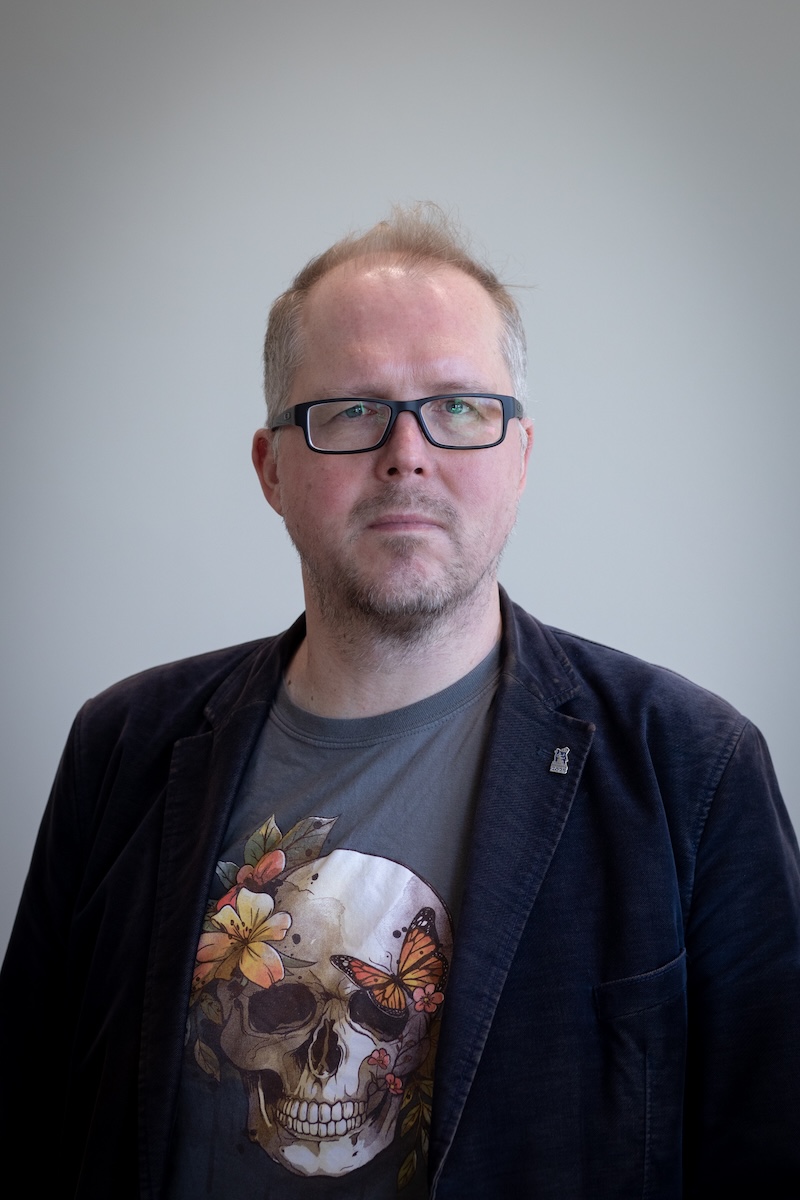

Juho Pirinen
Read more news

Alum Liting Aalto: 鈥業 want to keep learning new technologies鈥�
Liting Aalto studied Information and Service Management at Aalto University School of Business. Currently, she works as a data scientist at Elisa.
Aalto Inventors turns one: A year of bridging research and real-world impact
Aalto Inventors marks its first anniversary, having engaged 190 researchers across six cohorts in fields including AI, quantum, and biomaterials. New cohorts are planned for the next academic year, stay tuned and join the waitlist.
May challenges the Aalto community to be active together
Take part in events on campus and make sustainable mobility part of your working or study day.