ºÚÁÏÍø

Magda Posani

Magda Posani

Assistant Professor
Assistant Professor
T214 Civil Engineering

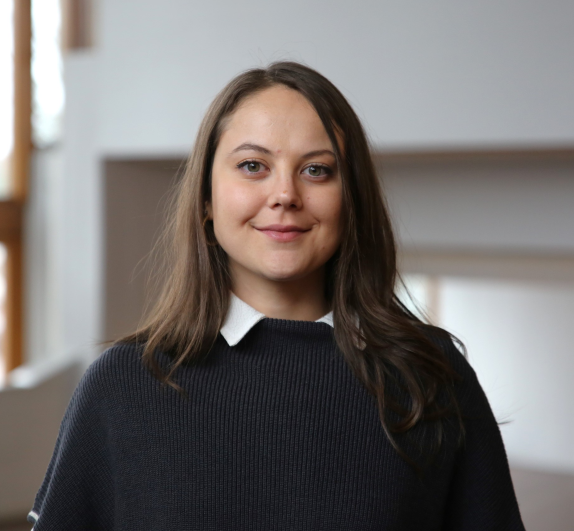
As the Assistant Professor of Building Physics at Aalto University, Prof. Magda Posani leads research at the intersection of hygrothermal building physics, materials science, and environmental sustainability.

Her research focuses on leveraging low-carbon materials (e.g., bio-based and clay-based ones) for renovating existing buildings, contributing to passively improving indoor comfort and reducing energy demands. This includes the use of new-vernacular solutions, such as ultralight earth insulation and massive bio-stabilised earthen walls, to regulate indoor temperatures throughout the year (balancing thermal mass and thermal insulation).
She also works on the passive control of indoor humidity using high-tech hygroscopic material solutions (e.g., 3D-printed superhygroscopic geopolymer panels). This is a critical area of study, as improper humidity levels can lead to occupant discomfort and negatively impact human health by triggering asthma and respiratory conditions, promoting the spread of viruses like influenza and SARS-CoV-2, and encouraging the growth of mold, fungi, and mites.

If you're interested in these topics, you can find more information in her recent TEDx talk: .

At Aalto University, her research is focused on developing adaptation strategies for the built environment in Nordic regions, with the goal of preparing buildings for future challenges posed by climate change, particularly in traditional constructions. This includes minimizing moisture-related degradation from heavy rainfall and mitigating summer overheating, issues expected to worsen with climate change in various parts of the world. Furthermore, she is working on developing bio-based insulation solutions from locally-available materials, sourced from forestry, agricultural, and demolition side streams.

Her work integrates perspectives from architecture and civil engineering, aiming to provide simple yet comprehensive solutions to complex challenges. She also actively engages with the next generation of engineers, fostering meaningful discussions in the classroom about sustainable and healthy futures in construction.

Previous Work

  • Passive humidity control using 3D-printed, super-hygroscopic, low-carbon materials ()
  • Passive material solutions for improving indoor comfort (, , )
  • Minimizing moisture-related degradation risks in post-insulating existing masonry walls, with recommendations for applications in historic and traditional buildings (, , )
  • Hygrothermal characterization of materials and systems (, )
  • Indoor climate monitoring (, )


Education
After obtaining an integrated Master's degree in 'Architectural Engineering' from the University of Bologna (Italy), she completed her Ph.D. research in Civil Engineering under the Doctoral Program for Eco-Constructions and Rehabilitation at the National Laboratory for Civil Engineering in Lisbon and the Faculty of Civil Engineering at the University of Porto (LNEC and FEUP, Portugal). This work included a visiting period at Eindhoven University of Technology (TU/e, Netherlands). Her dissertation focused on the use of thermal mortar-based insulation systems for retrofitting historic walls, evaluating the feasibility, efficacy, and compatibility of various solutions. She then spent three years as a PostDoc researcher at the Chair of Sustainable Construction at ETH Zürich (Switzerland), where she worked on bio- and clay-based materials for use in climate-neutral and climate-resilient renovations.


Are you interested in developing a thesis at Aalto University on topics such as current comfort and well-being in Nordic buildings, exploring the potential of clay- or bio-based materials to enhance indoor comfort, or minimizing the risks that climate change poses to existing buildings? Feel free to reach out to discuss your ideas!

Full researcher profile

Honors and awards

(TFK programme 2025) Bio-Design for Low Carbon Architecture (Bio-LCArch)

The Bio-Design for Low Carbon Architecture (Bio-LCArch) project is a collaborative initiative between Aalto<br/>University in Finland and Beijing Jiaotong University in China, geared toward demonstrating how bio-based<br/>materials can facilitate the construction industry's transition to net-zero emissions. By showcasing their<br/>effective use in achieving carbon reduction goals and advancing sustainable construction practices, the project<br/>seeks to cultivate critical thinking and foster a positive attitude toward sustainability in the next generation of<br/>architects and engineers. It equips students with the skills necessary to shift from traditional high-carbon<br/>methods to innovative low-carbon approaches, placing a strong emphasis on environmental sustainability, the<br/>use of natural materials, and the promotion of occupant well-being.<br/>The initiative focuses on developing courses, teaching materials, and strategic educational methodologies<br/>designed to further this vision at both universities. It strengthens students' understanding of sustainability<br/>issues and enhances their expertise in Life Cycle Analyses and Comfort-Energy efficiency optimization,<br/>providing them with the skills required to apply bio-based materials effectively in construction. Through this<br/>comprehensive learning experience, students are positioned as valuable assets in the workforce, prepared to<br/>drive the decarbonization of the construction industry throughout their careers.<br/>Core activities and results include: (I) Development of Teaching Materials and Twin Courses: The project will<br/>create modular teaching packages centered on bioconstruction and carbon-neutral design principles, as well<br/>as comfort and energy-efficiency. The packages will be made available open access on an online platform,<br/>serving as a hub for knowledge exchange for students and professionals interested in improving their<br/>knowledge on environmentally responsible construction practices. The modular teaching packages will be also<br/>used to develop two twin courses (2-5 ECTs each), tailored to the academic needs and strategic focuses of<br/>each HEI. (II) International Mobility: Facilitating mobility for faculty and students, the project promotes crosscultural dialogue and advances international partnerships in sustainable construction practices. These<br/>exchanges provide opportunities to test and refine teaching methods in a multicultural environment, enriching<br/>participants' educational experiences and intercultural competence. (III) Experimentation with Teaching<br/>Methods: By implementing and evaluating diverse teaching methodologies—such as hybrid learning,<br/>interactive online activities, and hands-on workshops—the project aims to improve educational practices<br/>within international, multicultural contexts. This approach allows for continuous feedback collection, refinement and adaptation of teaching strategies to maximize their effectiveness in the two different cultural<br/>settings of the HEIs as well and in multi-cultural teaching.<br/>
Granted funding (public project funding) Department of Civil Engineering Sep 2025

(JANE AND AATOS FOUNDATION) Bio-Rehab: Bio-clay composite solutions for Climate-Proof, Climate-Neutral, and Healthy Renovations

Granted funding (public project funding) Department of Civil Engineering Jan 2026

Bio-Design for Low Carbon Architecture (Bio-LCArch)

The Bio-Design for Low Carbon Architecture (Bio-LCArch) project is a collaborative initiative between Aalto<br/>University in Finland and Beijing Jiaotong University in China, geared toward demonstrating how bio-based<br/>materials can facilitate the construction industry's transition to net-zero emissions. By showcasing their<br/>effective use in achieving carbon reduction goals and advancing sustainable construction practices, the project<br/>seeks to cultivate critical thinking and foster a positive attitude toward sustainability in the next generation of<br/>architects and engineers. It equips students with the skills necessary to shift from traditional high-carbon<br/>methods to innovative low-carbon approaches, placing a strong emphasis on environmental sustainability, the<br/>use of natural materials, and the promotion of occupant well-being.<br/>The initiative focuses on developing courses, teaching materials, and strategic educational methodologies<br/>designed to further this vision at both universities. It strengthens students' understanding of sustainability<br/>issues and enhances their expertise in Life Cycle Analyses and Comfort-Energy efficiency optimization,<br/>providing them with the skills required to apply bio-based materials effectively in construction. Through this<br/>comprehensive learning experience, students are positioned as valuable assets in the workforce, prepared to<br/>drive the decarbonization of the construction industry throughout their careers.<br/>Core activities and results include: (I) Development of Teaching Materials and Twin Courses: The project will<br/>create modular teaching packages centered on bioconstruction and carbon-neutral design principles, as well<br/>as comfort and energy-efficiency. The packages will be made available open access on an online platform,<br/>serving as a hub for knowledge exchange for students and professionals interested in improving their<br/>knowledge on environmentally responsible construction practices. The modular teaching packages will be also<br/>used to develop two twin courses (2-5 ECTs each), tailored to the academic needs and strategic focuses of<br/>each HEI. (II) International Mobility: Facilitating mobility for faculty and students, the project promotes crosscultural dialogue and advances international partnerships in sustainable construction practices. These<br/>exchanges provide opportunities to test and refine teaching methods in a multicultural environment, enriching<br/>participants' educational experiences and intercultural competence. (III) Experimentation with Teaching<br/>Methods: By implementing and evaluating diverse teaching methodologies—such as hybrid learning,<br/>interactive online activities, and hands-on workshops—the project aims to improve educational practices<br/>within international, multicultural contexts. This approach allows for continuous feedback collection,<br/>Partners<br/>Beijing Jiaotong University<br/>refinement and adaptation of teaching strategies to maximize their effectiveness in the two different cultural<br/>settings of the HEIs as well and in multi-cultural teaching.
Granted funding (public project funding) Department of Civil Engineering Sep 2026

Research groups

  • Performance in Building Design and Construction, Assistant Professor

Publications

Pier Francesco Giordano, Magda Posani, Alina Galimshina, Maria Pina Limongelli 2025 Experimental Vibration Analysis for Civil Engineering Structures, EVACES 2025 - Volume 1

Magda Posani 2025 Moisture in Buildings - Proceedings of ICMB25

Magda Posani, Vera Voney, Pietro Odaglia, Yi Du, Anastasija Komkova, Coralie Brumaud, Benjamin Dillenburger, Guillaume Habert 2025 Nature Communications