


Professor Wojciech Sołowski discusses challenges of storing nuclear waste
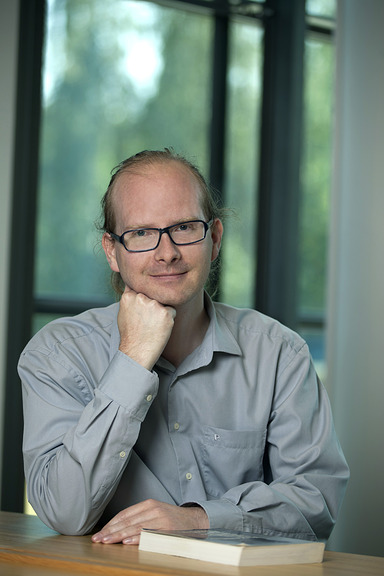
Wojciech Sołowski
Wojciech Sołowski joined Aalto University in 2014, when he was first appointed to the tenure track as an assistant professor of geotechnical engineering. In September 2020, he received tenure and a promotion to associate professor. Before Aalto University, he worked as a postdoctoral researcher at the University of Newcastle, Australia.
Sołowski’s field of research includes the numerical modelling of soils – including the development of the material point method and other numerical methods used to perform complex simulations – as well as the mechanics of unsaturated soils. He is also interested in the modelling of barriers used in underground nuclear waste storage.
Sołowski completed his master's degree at the Silesian University of Technology in Gliwice, Poland in 2002 before starting his doctoral studies in geotechnical engineering at Durham University in the UK. He received his doctorate in 2008 with the completion of his doctoral dissertation Unsaturated Soils: constitutive modelling and explicit stress integration.
Tenured Professors' Installation Talks
In the short videos, the new tenured professors present their own field and research.

Read more news

The Metex Prize 2026 winner is Hana Rehorči�kova�
The Metex Prize is awarded for excellence in Master’s thesis work done in collaboration with a technology company or to promote the significance and use of design and art in Finnish industry.
Ornamo Awards '26: The Design Forerunner Award to service designer Mariana Salgado
The Design Forerunner Award goes to service designer Mariana Salgado, who brings design into climate research and builds people’s participation in the sustainability transition.
Doctoral thesis: Kata Fodor examines sustainable diets – between the plate and the planet
In her doctoral thesis, Kata Fodor examines how more sustainable diets can be promoted through the design of environments, spaces, infrastructures, and cities.